Hidden Gems #21: Can I Have My Money Back?
113 days ago
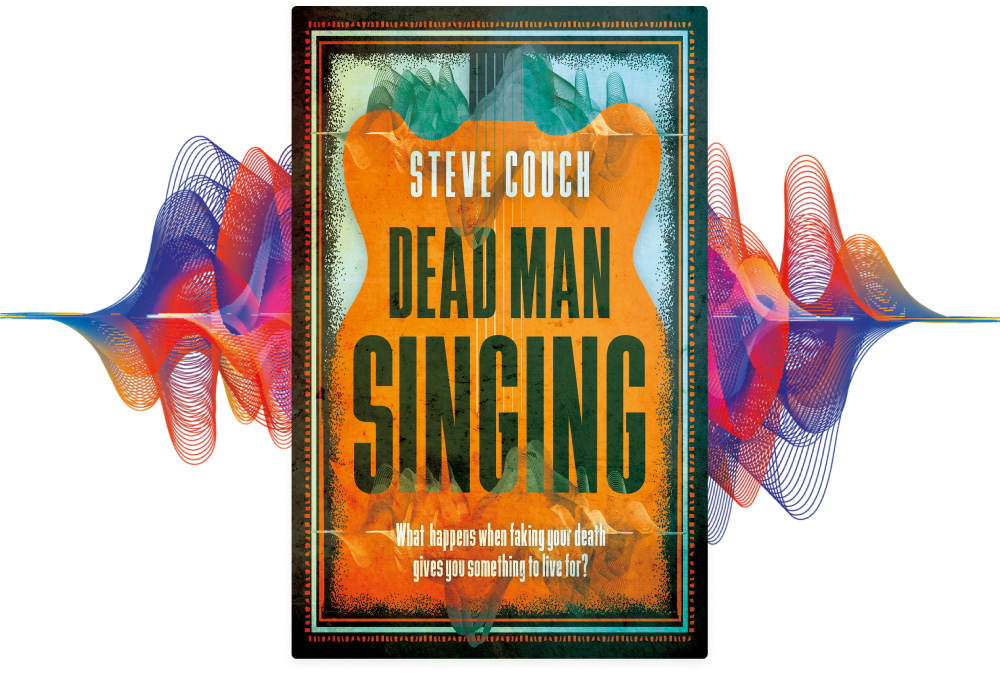
I’m often asked if Dave Masters from Dead Man Singing was based on any particular musician, and people always seem disappointed when I reply that he wasn’t. As I was creating him, I wanted someone with an undoubted talent, someone who was capable of crafting hit singles that caught the public ear, but who never followed up their biggest moments with a consistent flow of hits. Gerry Rafferty wasn’t in any way the inspiration for Dave, but he’s probably the best comparison I’ve found subsequently for the kind of career that I wanted to portray.
Most music fans of a certain age would recognise Baker Street, Right Down the Line, or Stuck in the Middle With You (the latter, even before Quentin Tarantino immortalised it in Reservoir Dogs), but would struggle to name many more of his songs. That’s an unfair legacy for a great, if troubled, talent, whose obituary in the Times described him as ‘a consummate songwriter, blessed with sensitivity and an enviable melodic flair that at its best recalled Paul McCartney.’
Can I Have My Money Back? (1971) was Rafferty’s first solo album, and the first thing he did after breaking up his folk act The Humblebums (the other half of which, Billy Connolly, didn’t do too badly afterwards). Researching Dead Man Singing, I spent a lot of time listening to Rafferty’s more acclaimed albums, particularly City to City (1978) (the one with Baker Street) and its follow up Night Owl (1979), but they somehow seemed to slick, too polished for what I was discovering about Dave Masters’ taste. When I found my way to Can I Have My Money Back?, I knew this was the Rafferty album that Dave would have included in his getaway stash of vinyl.
Not that there’s anything ramshackle about this album. It opens with the finely crafted New Street Blues, an upbeat tale of a down on his luck musician, crashing at friends’ houses and looking for either the next drink or the next break. There’s a sense of alienation, of the outsider, in much of Rafferty’s best work, and it’s easy to spot that in this album. Titles like Make You Break You, Sign On the Dotted Line and the title track are obvious flags, but songs like To Each and Everyone and Mary Skeffington are just as telling. He’s also capable of taking that outsider status and making something euphoric and uplifting out of it, with the outstanding The Long Way Round perhaps the best example here.
The music combines rock, folk and country, at times recalling the Beatles, The Band, and the distinctively British folk scene that the Humblebums-era Rafferty emerged from. There are no breakneck hard-rocking tracks, but plenty of variety in pace and tempo that shows him as much more than a one-trick pony.
There’s a seven-year gap between this, Rafferty’s first solo album, and City to City, his second. Among the musicians featured on Can I Have My Money Back? was Rafferty’s old school friend Joe Egan, with whom he then formed the band Stealers Wheel, who were the reason for that gap. They recorded three albums between 1972 and 1975 before breaking up, and the resulting legal wrangling left Rafferty unable to record new material for three years. The fact that the first album he recorded after that enforced lay-off included Baker Street shows that his talent hadn’t diminished in the meantime.
Despite such iconic hits, Rafferty remained an artist who regularly received greater critical acclaim than record sales. He had a talent that deserved more sustained success that he achieved, although it’s possible that his own self-sabotage was a factor in that. His time with Stealers Wheel was marked with departures (including his own, after recording the first album, before he was persuaded to return), and when Tarantino included Stuck in the Middle With You in Reservoir Dogs, the chance of a reissued single and resulting payday was missed because Rafferty refused to sanction the re-release.
Rafferty’s death, from liver failure, came in 2011 at the age of 63. Alcohol had been a large part of his life, as well as periods of depression. After his death, it’s notable that those leading the tributes were his fellow musicians. Charlie Reid of the Proclaimers said he was one of the few people to successfully straddle the worlds of folk and popular music, retaining the respect of people in both camps. Finbar Furey, a friend of Rafferty’s for more than 40 years, put him in ‘a different league completely’, adding , ‘He was one of the most talented musicians and singers I ever knew but he completely underestimated his own talent.’
Rafferty’s final days were spent at the home of his daughter Martha, who has said of that time, ‘He was dying and we both knew it, and it was okay.... His journey to death was the most profound thing I’ve ever witnessed.’ Perhaps, at the last, Rafferty produced his final, greatest composition.
There are no comments yet, be the first to comment...
Your comment will first need to be approved before it is visible.